Tuesday, March 25, 2014

Portrait of Cecil Taylor as a young man

Playing the music(s) we call jazz is not an easy life, neither regarding the art itself, nor as a way to make a living. The reasons for anyone to follow that path fall beyond the realm of logic; art is a tricky business, and longevity and sheer stubbornness do not necessarily bring about recognition and financial support for the artist’s work. Luck and chance can make or break a career. Even so, there are men and women who work relentlessly to realize whatever shakes their spirits. If there is one musician who’s taken his art to an overwhelming standard of technical virtuosity, swimming against the strongest tides of disapproval, that must be Cecil Taylor, who turns 85 today.

© Naiel Ibarrola, 2014
Years before Ornette put any music on record, before Coltrane stepped firmly into the unknown, Taylor was hammering his way into the scene in New York, but he never quite made it, even if he was the first jazz act at the now legendary Five Spot, turning it into a bona fide jazz venue. He was not only aware of jazz and its traditions, but he claimed that his approach to form and composition was based on Duke Ellington's, and, being an astonishing virtuoso, had very definite ideas on the value and role of technique in fellow pianists such as Thelonious Monk and Horace Silver, two clear instances of technique being the consequence of the music itself. Even so, his arrival must have been similar to Henry Cowell's in the "classical" world, thirty or forty years earlier.

Tuesday, March 18, 2014

Paco de Lucía: an introduction in tangos, and a PS

In the obituaries devoted to Paco de Lucía, the comments have focused on his adventures beyond Flamenco and its fusion with other musics, but in actual fact he never strayed too far from his roots and the vast majority of his recordings can still be sorted in the palos, the different forms of the genre. As he himself said "there are other musics I admire, but they don't make me feel like Flamenco does. It just breaks you."

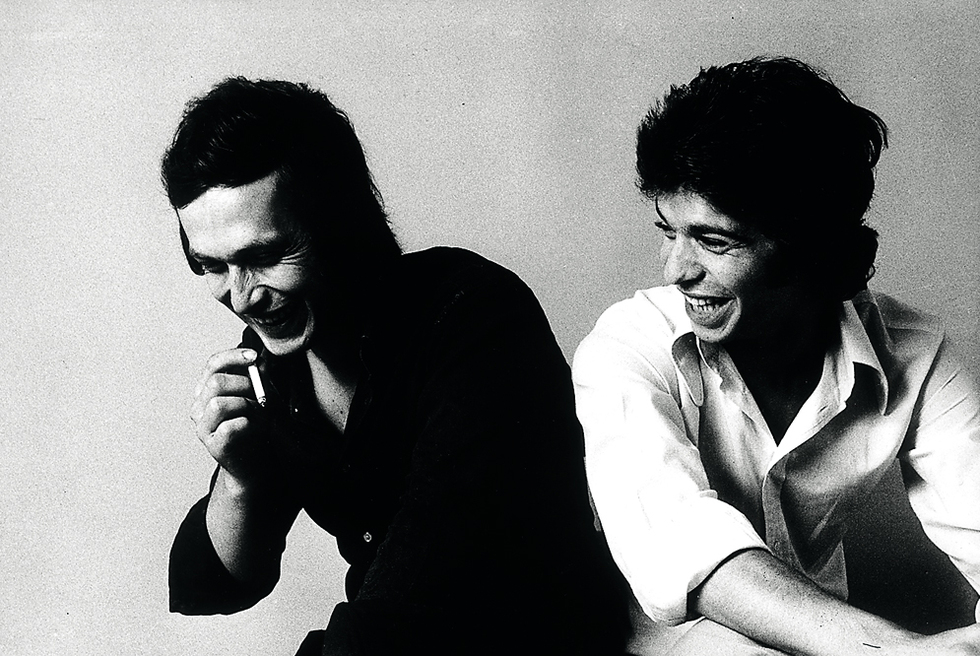
Paco de Lucía and Camarón de la Isla (picture by José Lamarca)
Among those palos, tangos — which, like Camarón and Paco, come from around Cádiz — must be the easiest to enjoy for anyone used to the 4/4 ever-present in pop, rock and a great deal of jazz. It not only shares the four-beat signature, but the accents also tend to fall on beats 2 and 4, where your typical hi-hat or snare drum wouldn't be so out of place.

Monday, March 3, 2014

RIP Francisco Sánchez

Francisco Sánchez, a/k/a Paco de Lucía (picture: ABC)
Francisco Sánchez's passing will leave us without new adventures of Paco de Lucía, the shivers when he appeared on the stage, the ecstasy at the end of a concert. It will divide music lovers between those of us who saw him live and those who didn't. These will have to make do with a sizable amount of recordings and video footage he leaves behind, evidence of the several lives that Francisco Sánchez was able to fit in Paco's: Francisco Sánchez was just 66 when he died, but Paco had been a working musician for over fifty years. So much for Andalusians being lazy and all that.

For me, a child in the Seventies, my first impression of Paco, on TV, was that of a charismatic, handsome, and very serious-looking guy. He had long hair, parted on the side, and although he dressed in a contemporary way, he seemed to follow Seventies fashion from a prudent distance; still in his twenties, he was young too. And he played very fast.

Paco on TVE

Friday, February 21, 2014

Random Dameronia

Tadd Dameron, c. 1946-48
(Bill Gottlieb/LoC)
Jazz has improvisation at its core, true, but ignoring composition and arranging would be a gross oversimplification and a mis-representation of the music. One of the great composers in its great tradition was Tadd Dameron, born on a day like this in 1917.

This is just a random sample of his compositions.

Monday, February 17, 2014

ND — Carlos Montoya: From St. Louis to Seville (and a book...)

Carlos Montoya: From St. Louis to Seville
(RCA/Victor LPM-1986)

This new entry in the infrequent series Notes on discography (ND) is about an early experiment in jazz-flamenco fusion. From St. Louis to Seville is an album by Carlos Montoya published in 1959, at a time when the recording business was booming partly thanks to the mass introduction of stereo and hi-fi, flamenco had began to be well known in the US, and jazz was going through a sweet spot in its history. The significance of this LP is more historical than musical, given the context of both flamenco (think Sabicas) or jazz at the time, or even the meeting of jazz and Spanish music arranged by Miles Davis and Gil Evans about a year later in their Sketches of Spain.

Saturday, February 15, 2014

Video alert: Birdland (TV, 1992)


Birdland was a TV show aired in 1992, produced in the UK by BBC Lionheart, and also aired in the US on Bravo. The shows are about 30-minutes long and the music is interspersed with interviews carried out, off-camera, by well-known British critic John Fordham. In at least some of the shows, US and UK were paired and sometimes played together. This is not only quite a snapshot from over 20 years ago, but a nice chance to see some young, fresh faces.

Five of those shows have cropped up on YouTube in the last few days. The shows are, in no particular order,
  • Herbie Hancock (w/ Ira Coleman-b, Tony Williams-d)
    Wayne Shorter (Jason Rebello-kb, Tracy Wormworth-b, Terri Lynne Carrington-d)
    (link)
  • Branford Marsalis (w/Kenny Kirkland-p, Bob Hurst-b, Jeff 'Tain' Watts-d)
    Julian Joseph (w/Alec Dankworth-b, Mark Mondesir-d)
    (link)
  • Steve Coleman Five Elements (w/David Gilmore-g, James Weidman-kb, Reggie Washington-b, Tommy Campbell-d) /
    Steve Williamson (w/Tony Remy-g, Joe Bashorun-kb, Gary Crosby-b, Steve Washington-d)
    (link)
  • Ornette Coleman & Prime Time (Ken Wessell-g, Chris Rosenberg-g, Dave Bryant-kb, Al McDowell-b, Denardo Coleman-d, Badal Roy-tabla)
    Cassandra Wilson-Cleveland Watkiss (w/Rod Williams-p, Kevin Bruce Harris-b, Mark Johnson-d)
    (link)
  • Don Cherry & Multikulti (w/ Peter Apfelbaum-fl-ts-p, Bo Freeman-b, Hamid Drake-d-perc)
    (link)

Monday, February 10, 2014

Jazz is... / Jazz is not...


That is the last paragraph of Martin Williams's review of the film I Want to Live (IMDB, Wiki), published on The Jazz Review (May 1959, p. 39).

This and other issues of The Jazz Review, a short-lived but groundbreaking magazine, can be read at the Jazz Studies Online website. You can download a PDF of the issue above, here.