Sunday, June 29, 2014

Following Eric Dolphy

For all the lack of audience and shaky economic prospects, your average jazz musician is someone who works very hard to master their instrument and knows music theory inside out. Even if it doesn't permeate all of it, there is, within jazz, an honourable tradition of art for art's sake, of the fight against oneself and the infinite choices offered by music and sound. In more detail, the profile of a jazz musician as a young person today would be someone who got started early in music, has gone through “classical” studies of some sort, is a versatile virtuoso with their instrument, and will have to go through New York City at some point of their lives as some sort of validation.

Just like Eric Dolphy.

Eric Dolphy by Naiel Ibarrola

Dolphy, together with Ornette Coleman and John Coltrane (he worked with both), was the most influential “reedman” to come up in the early 1960s. Be it on flute or, especially, on alto sax and bass clarinet, he established a way of playing that still sounds contemporary. By what can be heard today, I suspect that Dolphy has at least a comparable following among musicians, even though Coleman and Coltrane are more visible figures in the canon. But posterity is fickle.

Friday, June 20, 2014

The joy of Horace

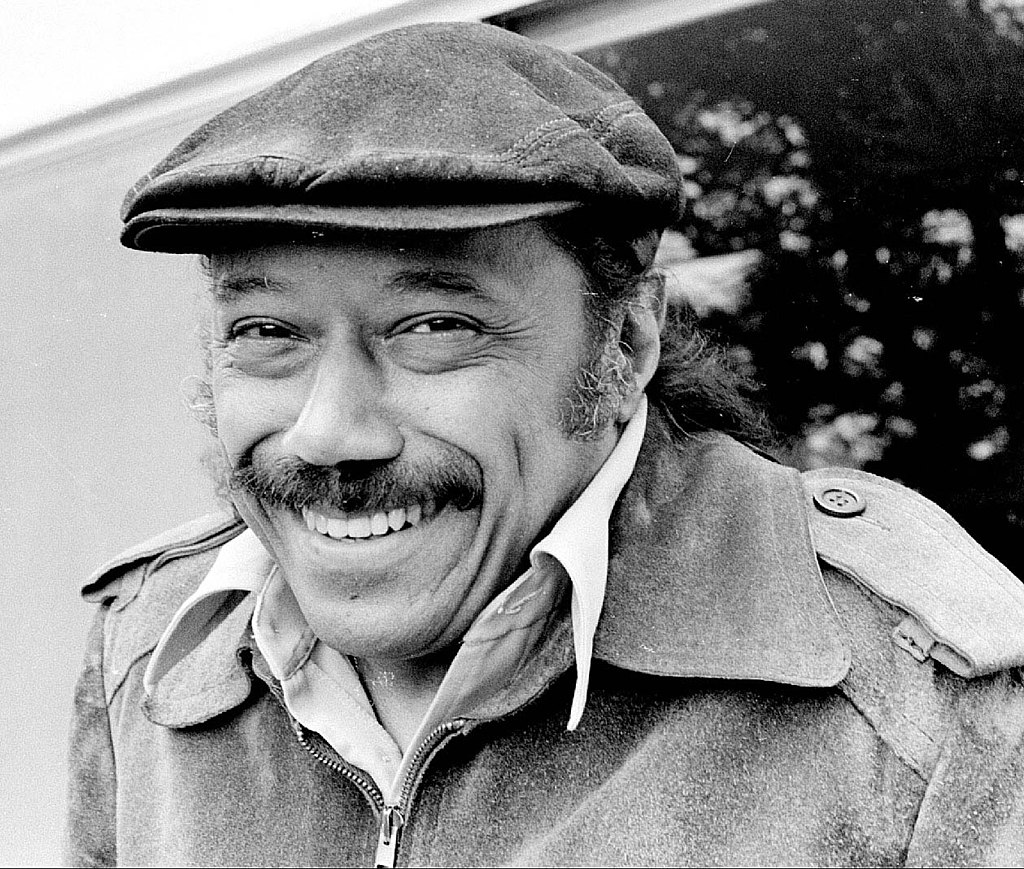
Horace Silver pictured in 1989 by Dimitri Savitski (Wikipedia)

Since back in 2007 when bassist Christian McBride made a passing comment on Horace Silver's Alzheimer, his passing yesterday was not unexpected news (so much so, that a rumour became news and spread like fire earlier in the year).

There are very fine obits around (like this one) about Silver's wonderful life, so we'll skip that.

His legacy, what remains after the man's gone, is phenomenal. As a piano player, his style was very rhythmic (watch out for that left hand, which can also be heard in contemporaries such as John Williams and Eddie Costa) and somewhat sketchy, as if he was dotting down ideas for new compositions as he was playing them. A prolific composer and a tasking leader, his music was lively, bluesy, gutsy, churchy, with feeling.

Thursday, June 12, 2014

The drums of bossa nova

Marketing has gone truly global. At least for those of us living in the Western world and glued to a screen with access to the internet, there are trends that everybody seem to subscribe to, at least for a minute.

Right this minute, there are two trends leading to Brazil, one the biggest in the world, the other just a musical footnote. The latter is about the 50th anniversary of the release of Getz/Gilberto (never mind all the empty blurbs — it is a masterpiece), which may give the impression that bossa-nova is all Brazil ever had to offer musically (it isn't) or even that it didn't really blossom till the Americans got involved in it.

Again, publicity-wise that may be true, but musically nothing surpasses João Gilberto's first three albums recorded between 1959 and 1961 back in Brazil. And even for the Americans, things didn't really take off until, after a few trials on their own, they got the Brazilians involved, which made the difference between great (like Stan Getz's album with Charlie Byrd) and a masterpiece.

Listening to Jazz/Samba and Getz/Gilberto, there's one huge difference between the two albums. Whereas for the former it seemed necessary to have two drummers to reproduce Brazilian rhythms (and the percussion gets quite heavy), there's only one drummer on the latter, and what he does is a wonder of subtlety and dynamics. It's Washington D.C. v. Rio de Janeiro; Deppenschmidt & Reichenbach v. Banana.

Milton Banana (c. 1979)

When I first read the name Milton Banana as the drummer in Getz/Gilberto, I thought it was a joke. It was actually the alias of Antônio de Souza (1935-1998), who not only played on Getz/Gilberto, but also on João Gilberto's first LP, which established what we know as bossa. He was the original bossa-nova drummer.

Wednesday, May 21, 2014

The "classical" side of Marc Ribot

Guitar proficiency today is just ridiculous, especially with this not-so-new wave of eclecticism, of not restricting oneself to one style of music. People like Bill Frisell, Julian Lage, Nels Cline... are able to jump genres without blinking, whereas others, perhaps more specialized, like Russell Malone, Frank Vignola, John Pizzarelli or Joe Morris and Mary Halvorson are reaching new heights in their art all the time.

All those musicians are just incredible, and you should check them out, either live or on record, and among them a favourite of this blog is Marc Ribot, who turns 60 today.

Ribot has played and recorded as leader and as a sideman, with projects that go from John Zorn's Electric Masada to Alison Krauss & Robert Plant's Raising Sand, or situations like last year's Jazzaldia, where he played with Zorn one day and with Diana Krall on the next. Without being a virtuoso in the conventional sense — although his technique more than serves its purpose — Ribot's taste, touch and indescribably rich, meaty, succulent tone make him a very demanded six-stringer (which helps restore faith in the music scene today, to be frank).

As a child, Ribot was neighbours with noted Haitian guitarist and composer Frantz Casseus, who gave lessons to young Marc. In this article, Ribot talks about his teacher.

Marc Ribot and Frantz Casseus in 1987. Photo by Harriet Ribot.

Friday, May 9, 2014

RIP Joe Wilder (1922-2014)

Joe Wilder at IJS
(Photo by Ed Berger)
Ed Berger, his good friend and biographer, reports the passing of Joe Wilder earlier today. Wilder, somehow like Hank Jones, was a gentleman, a dedicated craftsman in his instrument, from which he extracted the most beautiful sound, soft yet slightly brassy. With him gone, yet another window to the past is closed, but at least we have Berger's biography, which is already available. And we'll always have the records.

This is an article about Wilder by Berger. Here, he's at Marian McPartland's Piano Jazz on NPR.

This is Wilder taming an old warhorse.


Wednesday, April 30, 2014

It's International Jazz Day

Happy and all that for UNESCO's International Jazz Day, but since I either listen to, think or write (sometimes even dream) about jazz every single day, my celebration will consist of a quiet thought about all the men and women who have spent their lives pursuing beauty in this music, especially those who went against the grain, be it personal problems, illness, financial straits, prison or just the lack of an understanding audience.

As an illustration, I leave you with a live recording in a New York club by a great, happy guitar virtuoso who left us too soon possibly because he worked himself to death, accompanied by an unsung hero of the piano, a true master of swing and the blues who also left way too soon because he lived the life he had to live, despite his epilepsy.

For all those musicians, regardless of gender, skin pigmentation or nationality, "I Remember You" indeed.

Monday, April 28, 2014

Denzil Best's "Move"

Denzil Best pictured by Bill Gottlieb
Yesterday was the birthday of Denzil Best (1917-1965) a musician whose life was sadly defined by bad health. He started on trumpet, but had to abandon it when he was very young because of a pulmonary illness. He then went on to play the piano and bass, and finally the drums, on which his brushwork was masterful. Later in life he had problems with his wrists, and finally died after an accident.

Interestingly, in spite of a few good recordings, his place in posterity is secured because of a number of compositions. "Allen's Alley" (a/k/a "Wee"), "Dee Dee's Dance", "45-Degree Angle" (later modified by Herbie Nichols), "Bemsha Swing" (co-signed with Thelonious Monk), and his most famous opus, "Move". Now you'll see why Best deserves all the posterity we can get him.