Wednesday, April 30, 2014

It's International Jazz Day

Happy and all that for UNESCO's International Jazz Day, but since I either listen to, think or write (sometimes even dream) about jazz every single day, my celebration will consist of a quiet thought about all the men and women who have spent their lives pursuing beauty in this music, especially those who went against the grain, be it personal problems, illness, financial straits, prison or just the lack of an understanding audience.

As an illustration, I leave you with a live recording in a New York club by a great, happy guitar virtuoso who left us too soon possibly because he worked himself to death, accompanied by an unsung hero of the piano, a true master of swing and the blues who also left way too soon because he lived the life he had to live, despite his epilepsy.

For all those musicians, regardless of gender, skin pigmentation or nationality, "I Remember You" indeed.

Monday, April 28, 2014

Denzil Best's "Move"

Denzil Best pictured by Bill Gottlieb
Yesterday was the birthday of Denzil Best (1917-1965) a musician whose life was sadly defined by bad health. He started on trumpet, but had to abandon it when he was very young because of a pulmonary illness. He then went on to play the piano and bass, and finally the drums, on which his brushwork was masterful. Later in life he had problems with his wrists, and finally died after an accident.

Interestingly, in spite of a few good recordings, his place in posterity is secured because of a number of compositions. "Allen's Alley" (a/k/a "Wee"), "Dee Dee's Dance", "45-Degree Angle" (later modified by Herbie Nichols), "Bemsha Swing" (co-signed with Thelonious Monk), and his most famous opus, "Move". Now you'll see why Best deserves all the posterity we can get him.

Tuesday, April 15, 2014

Billie Holiday, Club Bali... and the Internet

It’s funny how some people sometimes long for the great filters of olden days, when there was no internet, from record producers and publicists who had some influence on what music was commercially released or not, to professional journalists and editors who produced well-written, fact-checked copy. Those filters were by no means perfect, but they had their role.

Consider this picture. It was, probably still is, one of the first results when you type “Ray Bauduc”, “Walter Page” or “Claude Hopkins” on the world’s most-used search engine (owners of the blog-platform you’re reading this on). Those are minor names in the great scheme of Western culture. If you type “Billie Holiday”, you’ll probably see this picture too sooner than later.


Thing is, those are not Ray Bauduc, Walter Page or Claude Hopkins.

Monday, April 7, 2014

Kit Downes & Tom Challenger: Wedding Music live at Royal Festival Hall

The Royal Festival Hall is hosting an organ season to celebrate the culmination of the three-year long refurbishment works to bring back its organ to life, with its 7,866 pipes laid along the span of the stage.

The organ at Royal Festival Hall, refurbished (© Nick Rochowski)

Tuesday, March 25, 2014

Portrait of Cecil Taylor as a young man

Playing the music(s) we call jazz is not an easy life, neither regarding the art itself, nor as a way to make a living. The reasons for anyone to follow that path fall beyond the realm of logic; art is a tricky business, and longevity and sheer stubbornness do not necessarily bring about recognition and financial support for the artist’s work. Luck and chance can make or break a career. Even so, there are men and women who work relentlessly to realize whatever shakes their spirits. If there is one musician who’s taken his art to an overwhelming standard of technical virtuosity, swimming against the strongest tides of disapproval, that must be Cecil Taylor, who turns 85 today.

© Naiel Ibarrola, 2014
Years before Ornette put any music on record, before Coltrane stepped firmly into the unknown, Taylor was hammering his way into the scene in New York, but he never quite made it, even if he was the first jazz act at the now legendary Five Spot, turning it into a bona fide jazz venue. He was not only aware of jazz and its traditions, but he claimed that his approach to form and composition was based on Duke Ellington's, and, being an astonishing virtuoso, had very definite ideas on the value and role of technique in fellow pianists such as Thelonious Monk and Horace Silver, two clear instances of technique being the consequence of the music itself. Even so, his arrival must have been similar to Henry Cowell's in the "classical" world, thirty or forty years earlier.

Tuesday, March 18, 2014

Paco de Lucía: an introduction in tangos, and a PS

In the obituaries devoted to Paco de Lucía, the comments have focused on his adventures beyond Flamenco and its fusion with other musics, but in actual fact he never strayed too far from his roots and the vast majority of his recordings can still be sorted in the palos, the different forms of the genre. As he himself said "there are other musics I admire, but they don't make me feel like Flamenco does. It just breaks you."

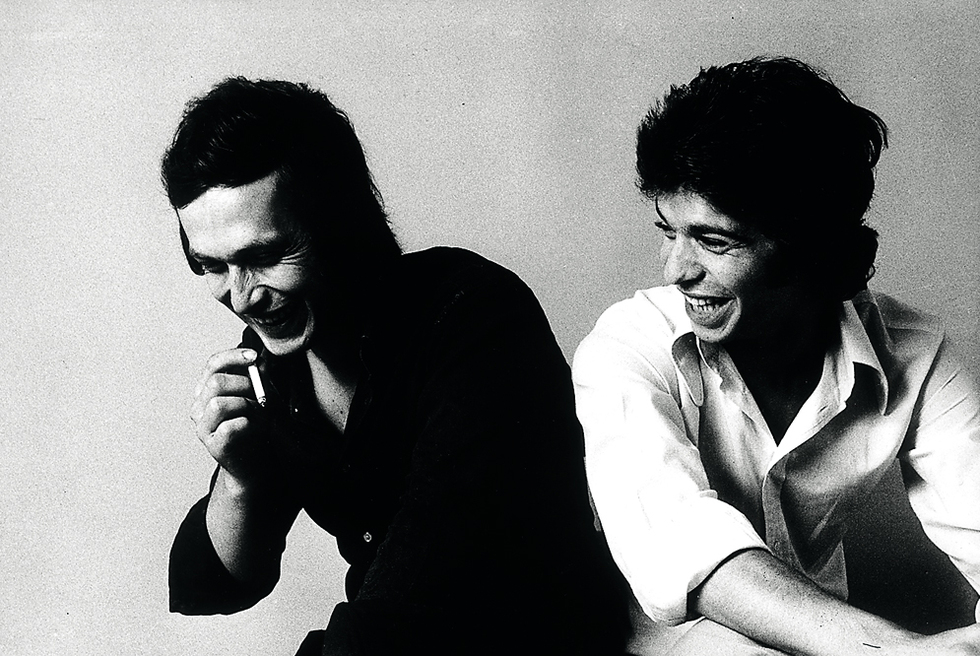
Paco de Lucía and Camarón de la Isla (picture by José Lamarca)
Among those palos, tangos — which, like Camarón and Paco, come from around Cádiz — must be the easiest to enjoy for anyone used to the 4/4 ever-present in pop, rock and a great deal of jazz. It not only shares the four-beat signature, but the accents also tend to fall on beats 2 and 4, where your typical hi-hat or snare drum wouldn't be so out of place.

Monday, March 3, 2014

RIP Francisco Sánchez

Francisco Sánchez, a/k/a Paco de Lucía (picture: ABC)
Francisco Sánchez's passing will leave us without new adventures of Paco de Lucía, the shivers when he appeared on the stage, the ecstasy at the end of a concert. It will divide music lovers between those of us who saw him live and those who didn't. These will have to make do with a sizable amount of recordings and video footage he leaves behind, evidence of the several lives that Francisco Sánchez was able to fit in Paco's: Francisco Sánchez was just 66 when he died, but Paco had been a working musician for over fifty years. So much for Andalusians being lazy and all that.

For me, a child in the Seventies, my first impression of Paco, on TV, was that of a charismatic, handsome, and very serious-looking guy. He had long hair, parted on the side, and although he dressed in a contemporary way, he seemed to follow Seventies fashion from a prudent distance; still in his twenties, he was young too. And he played very fast.

Paco on TVE