Showing posts with label George Avakian. Show all posts

Friday, February 4, 2022

Miles Davis: February 4th, 1958—in pictures

On Tuesday, February 4th, 1958, at Columbia Records' studio on Manhattan's 30th St., a session was booked for the afternoon. It lasted from 2 to 6.30 pm, with Harry "Chappy" Chapman, an in-house veteran going back to the early 1940s, manning the control room. 

The musicians and producer involved may have not known it at the time, but this was to be the first of two momentous occasions: this session and the following one, on March 4, were to be the last produced for Miles Davis by George Avakian, who had put him in the map by signing him to Columbia, the label he ended up staying with for thirty years, between 1955 and 1985. 

These sessions on February and March 4 would also be the last ones by Davis's "first quintet", with Red Garland on piano and "Philly" Joe Jones on drums. Together, they'd form Milestones, a, er, milestone in Miles Davis's career, which may have seemed unsurpassable at the time. Not for long, though: his next small group album would be Kind of Blue.
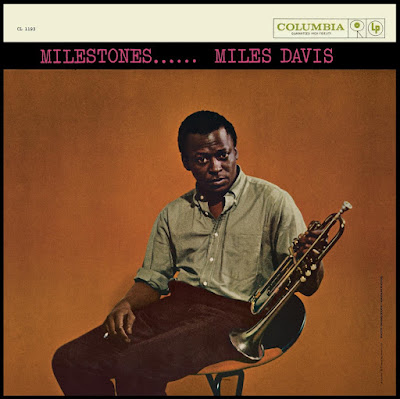
Cover of Milestones. Photograph by Dennis Stock.

Thursday, November 23, 2017

For the love of George


George Avakian, Coleman Hawkins and Sonny Rollins
Newport Jazz Festival, July 6, 1963
©Burt Goldblatt/CTS Images
George Avakian has died. He was 98. He lived a long, good life. For us, music lovers, the important bit is that he was a record producer, and a pioneer at that. Trying to give a fair overview of his whole career is almost impossible, and you will notice that, more often than not, the focus is on less than a decade, from 1950—when he produced Benny Goodmanʼs Famous 1938 Carnegie Hall Jazz Concert—till 1958, when he left Columbia Records. Not all eras deserve the same attention, and those years were very intense for Avakian: he signed Dave Brubeck, Erroll Garner and a certain Miles Davis into the big time, and relaunched the careers of Louis Armstrong and Duke Ellington. But before that, he established, or helped establish, the concepts of the jazz album and the reissues of older recordings, a paradigm still extant. After those heady times at Columbia, he produced Sonny Rollinsʼs comeback in the sixties, beginning with The Bridge, all the studio recordings of Paul Desmond with Jim Hall—one LP for Warner Bros., the rest for RCA—and launched the careers of Charles Lloyd and Keith Jarrett. And still, this doesnʼt make him justice (Discogs.com, as good as it is, barely scratches the surface).