Sunday, May 26, 2013

The story of "So What"

While we were discussing the convoluted story of the "Rhythm-A-Ning" riff, my worthy constituent Michael 'Jazz Lives' Steinman, purveyor of happiness, said that
certain riffs and variations are "in the air"
which is absolutely true. From outright plagiarism to excessive, but unintentional, "inspiration", these things can happen (I once put together a really pretty set of chords worth of Rachmaninov, so much so that... you get my drift). And it can happen to anyone, even master composer Benny Golson, as he explains to another master composer, Horace Silver, here.

That's all very well, but in American popular music there was ("was", hopefully) laxity when it came to naming the author(s) of a tune. Take Thelonious Monk's "'Round Midnight". How much did Cootie Williams have to do with it, beyond being the first band leader to record it? This is just an example: any unlikely name, from disc-jockey Alan Freed's name on rock'n'roll records, to manager Irving Mills's on Duke Ellington's, it'd be healthy to raise a brow or two.

Another example: Gil Evans only discovered that "Donna Lee" was not Charlie Parker's tune when he asked him about it, to arrange it for Claude Thornhill, and Parker sent him to his  sideman, Miles Davis, who was just 21 at the time.

Saturday, May 18, 2013

Sidney Bechet... and Eddie Condon (and Bird!) in colour

The wonders of the Internet. I just saw this beautiful montage on Sidney Bechet (the song is "Dans les Rues d'Antibes"):


Watching carefully, you'll be able to see Eddie Condon and his 4-string guitar in different occasions with his all-stars, also, although very briefly Buddy Rich, Kid Ory, and Muggsy Spanier, and, most surprising of all, the unlikely group of Charlie Parker, Chubby Jackson, and George Wettling, starting at 1:51.

L to R: Charlie Parker, Chubby Jackson, George Wettling

Wednesday, May 15, 2013

SALT PEANUTS!!! SALT PEANUTS!!! – Massey Hall, 60 years after

Bud Powell, Charles Mingus, Max Roach, Dizzy Gillespie, Charlie Parker
Massey Hall, Toronto, May 15, 1953
Photo by Harold Robinson

Sixty years ago today, at about 20:30, Toronto time, everything was ready for a historical evening. The best quintet in history, reuniting the founder fathers of bebop, a bunch of jazz revolutionaries, were going to play together in a summit meeting of music. This is the infamous night when a plastic sax had to be borrowed for Charlie Parker, because he hadn't brought his instrument. The night when he and his former soulmate, Dizzy Gillespie, exchanged musical punches. The night of Bud Powell's first appearance after his release from hospital.

You probably knew that. Every jazz fan knows that. However, half of the paragraph above is untrue. Of course, we've read that story many times, and it's very likely that we will read it again. But it is essentially false. Untrue. Even so, it's a story that has been repeated over and over again in the media, either general or specialized, in Spanish and in English.

Tuesday, April 30, 2013

Twenty years after

In the summer of '92, while Spain was beginning to delude itself thinking we were something we're not, I was down and out in the streets of London. Not that I was skint. I wasn't rich either, but I'd rather spend my cash in records. Just in Oxford Street there were two HMV and two Virgin stores, four multi-storey record shops in just over one mile. Add to that Tower Records and another HMV in Piccadilly Circus. On top of all that there were the specialized shops, like Ray's at the time still in Shaftesbury Avenue, with jazz on the ground floor and blues in the cellar. In those four weeks of August, I did do all my touristy sight-seeing, but even though I had my eyes on the attractions, my mind was working out what to bring back home, how much to spend, and where. I'm not really proud of this. I say it like addicts tell things to other addicts.

I came from a small village, and I hadn't really experienced Madrid or Barcelona, and so London was Xanadu, Ali Baba's cave, cornucopia. A paradise from which I took fruits that will stay with me forever. A 2-CD set with live recordings by Charlie Christian; the early CD issue of Benny Goodman's 1938 concert at Carnegie Hall; Stan Getz's live set at Storyville '51 reissued by Giants of Jazz in Italy; T-Bone Walker's complete Imperial recordings; plus others that have dropped from memory. Things I knew existed. Things I didn't know existed.

Monday, April 29, 2013

Piazzolla in New York (and V): Carlos Rausch, 2013

In the vastness of Piazzolla's legend, Carlos Rausch amounts to a mere footnote. His name has been regularly cropped (to Rauch) or he's been moved from the piano bench to the percussion department. Tagged with "percussion" or "(piano)(maybe)" he's just a ghost in a dubious recording according to the information that tumbles around, free of criticism or revision, on the internet.

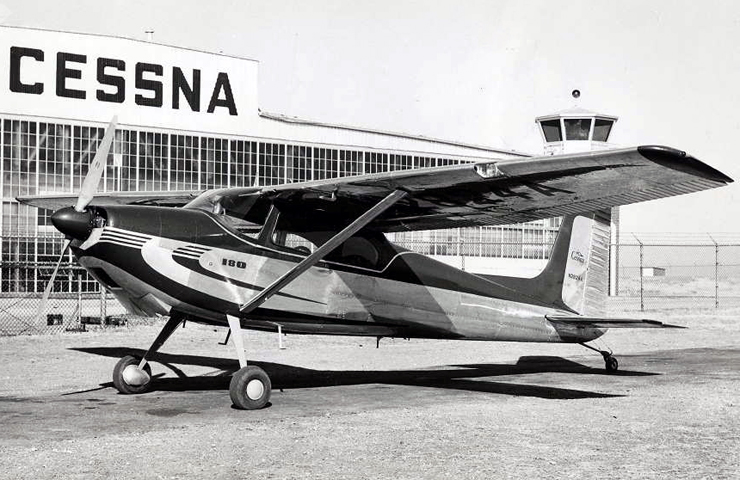
However, behind the name there's not only a real person, but a warm and friendly character to boot. There's also a whole life devoted to music, including work as a musical director and conductor, as a composer, as well as past extra-musical activities like his forays into aviation as the proud pilot of his own Cessna 180.

Carlos Rausch
Rausch was born in Buenos Aires, Argentina, 89 years ago. In 1958, almost at the same time as Piazzolla, he switched hemispheres, but unlike Piazzolla, he didn't return to Argentina. He lived in a number of places in the North America, were he lives today, retired, but still devoting a good chunk of time and effort to music.

In this entry about Piazzolla's "lost years" in New York, we turn to this pupil of Juan Carlos Paz, in Argentina, and Pierre Monteux, in the US, for him to tell us about his life as an immigrant, professional musician.

This is also the last entry in the series devoted to Piazzolla's second New York sojourn, 1958-1960. See the very end for acknowledgements, bibliography, and links to several Spotify playlists.

Saturday, April 20, 2013

Piazzolla in New York (IV): Rausch on Piazzolla, 1958-1960

Portada de Take Me Dancing
Piazzolla is one of the best-known Argentinian musicians in the world, even though he died over twenty years ago. He knew international acclaim, worked with great artists, flew over stylistic boundaries and reached different countries and audiences... However, between his upward rise culminating with the artistic success of his Octeto Buenos Aires, and the turning point marked by “Adios Nonino”, the requiem to his father, who died in late 1959, there were two years of misty uncertainty, spent mainly in New York City, from February 1958 to June 1960. While the city was bursting with all kinds of music (in a especially glorious year for jazz) and the US was, more than ever, the most powerful country in the world, reaching the end of Eisenhower's years at the helm, Piazzolla was struggling with the American dream. His recollections of it, bittersweet, hardly come up in the memoirs compiled by with Natalio Gorín.

The New Yorker, January 30th, 1960. The "collection of
Argentinians" refers to Copes, Piazzolla, Rausch & co. 
The portrait of Piazzolla's life in New York is somewhat blurry. Beyond the stories of those who knew or worked with him, his name hardly appears among press notices; even though these note some of his perfomances, he rarely gets a name check, nor does dancer Juan Carlos Copes, whom Piazzolla worked with from the second half of 1959 to the beginning of 1960. Copes himself has told the story of how the fire brigade had to be called to deal with the crowds at Waldorf Astoria where they performed there, but those were probably due more to headliner Eddie Fisher than to a sudden tango fever sweeping Manhattan. The great Piazzolla was, in fact, just another anonymous musician among the thousands who made a living in late-1950s New York, a golden age for studio work in the city.

Argentinian Carlos Rausch was a pianist and copyist for hire in New York at the time, and he worked with Piazzolla oftentimes. This is part of his first ever interview about Piazzolla (see this previous post for more), for which he listened to the albums Take Me Dancing and Evening in Buenos Aires, recorded by Piazzolla in New York in 1959, also for the first time. The following is my translation of the original interview, which was made in Spanish.

Carlos Rausch and Astor Piazzolla, New York, May 1959
(© Carlos Rausch)

Monday, April 15, 2013

Piazzolla in New York (III): Take Me Dancing! — Discographical details

In 1959, while jazz was going through an incredibly fertile period and New York's cultural life was just mind-boggling, the grand modernizer of tango was struggling to make ends meet, and musically he wasn't really getting anywhere.

Since then, the result of his plans to mix jazz and tango have been marked as pretty much irrelevant by conventional wisdom, and with no hard data in the original album sleeve or any other published sources, there's hardly anything solid regarding the personnel and date of recording of Take Me Dancing. Who would be interested in knowing the details of a "failure", right?

Discographical research on Take Me Dancing! begins and ends with the picture below, first published in Piazzolla Loco Loco Loco (Ed. de la Urraca; Argentina, 1994), a book by Óscar López Ruiz, one of the main guitar players in Piazzolla's career. Besides the faces you can see on it, other names have been offered as present in this session, such as Tito Puente (discussed in the previous post), guitarist Barry Galbraith, and bassist George Duvivier. There's also the additional question of there being more musicians in it than can be heard on the record. A few internet searches will give out some vague results, with errors in the spelling of names and the pairings of instruments and musicians.

Sunday, April 26th, 1959?

In any case, the complete personnel is, from left to right: